

The top things to do in Marrakech are to watch Jemaa el-Fnaa come alive at dusk, explore the souks, visit the Bahia Palace, Ben Youssef Madrasa and Saadian Tombs, walk through the Majorelle Garden, try a traditional hammam, eat tagine and tanjia, and take a day trip to the Atlas Mountains.
Understanding the city's layout
Marrakech sits on a plain at about 450 metres above sea level, with the High Atlas visible to the south on clear days. It was founded in the 11th century and its red earthen walls, around 19 km long, give it the name "the Red City". The old walled city, the medina, is a UNESCO World Heritage site.
Visitors mostly move between four areas:
- The medina: souks, monuments, riads and Jemaa el-Fnaa. Largely car-free and best covered on foot.
- The Kasbah and Mellah: the southern part of the medina, with the royal palace walls, the Saadian Tombs and the old Jewish quarter.
- Gueliz: the new town built in the 20th century, with boulevards, shops, galleries and cafés.
- Hivernage and the Palmeraie: larger hotels, gardens and resorts with pools.
Monuments worth your time
You could spend a week on monuments. These are the ones to prioritise, in rough order.
- Ben Youssef Madrasa: a former Quranic school with a courtyard of carved cedar, stucco and zellige tiles, and small student cells upstairs.
- Bahia Palace: a 19th-century vizier's palace of courtyards, painted ceilings and gardens.
- Saadian Tombs: royal tombs from the 16th century, sealed for generations and rediscovered in 1917. The Chamber of the Twelve Columns is the highlight.
- El Badi Palace: the vast ruined palace of Sultan Ahmad al-Mansur, with views over the medina from its walls.
- Koutoubia Mosque: the city's landmark, with a 12th-century minaret. Entry is for Muslims only, but the gardens and exterior are open to all.
- Dar Si Said and the Marrakech Museum: good for crafts, carpets and architecture if you have extra time.
Opening hours and ticket prices change, so check locally. Most monuments are paid for in dirhams at the door. If you prefer a ready-made schedule, follow our 3-day Marrakech itinerary.
Jemaa el-Fnaa and the souks
Jemaa el-Fnaa is the central square and the reason many people come. By day it has orange juice stalls, water sellers and henna artists. From late afternoon, dozens of food stalls are set up, and circles form around musicians, acrobats and storytellers. Go once in daylight and once after dark.
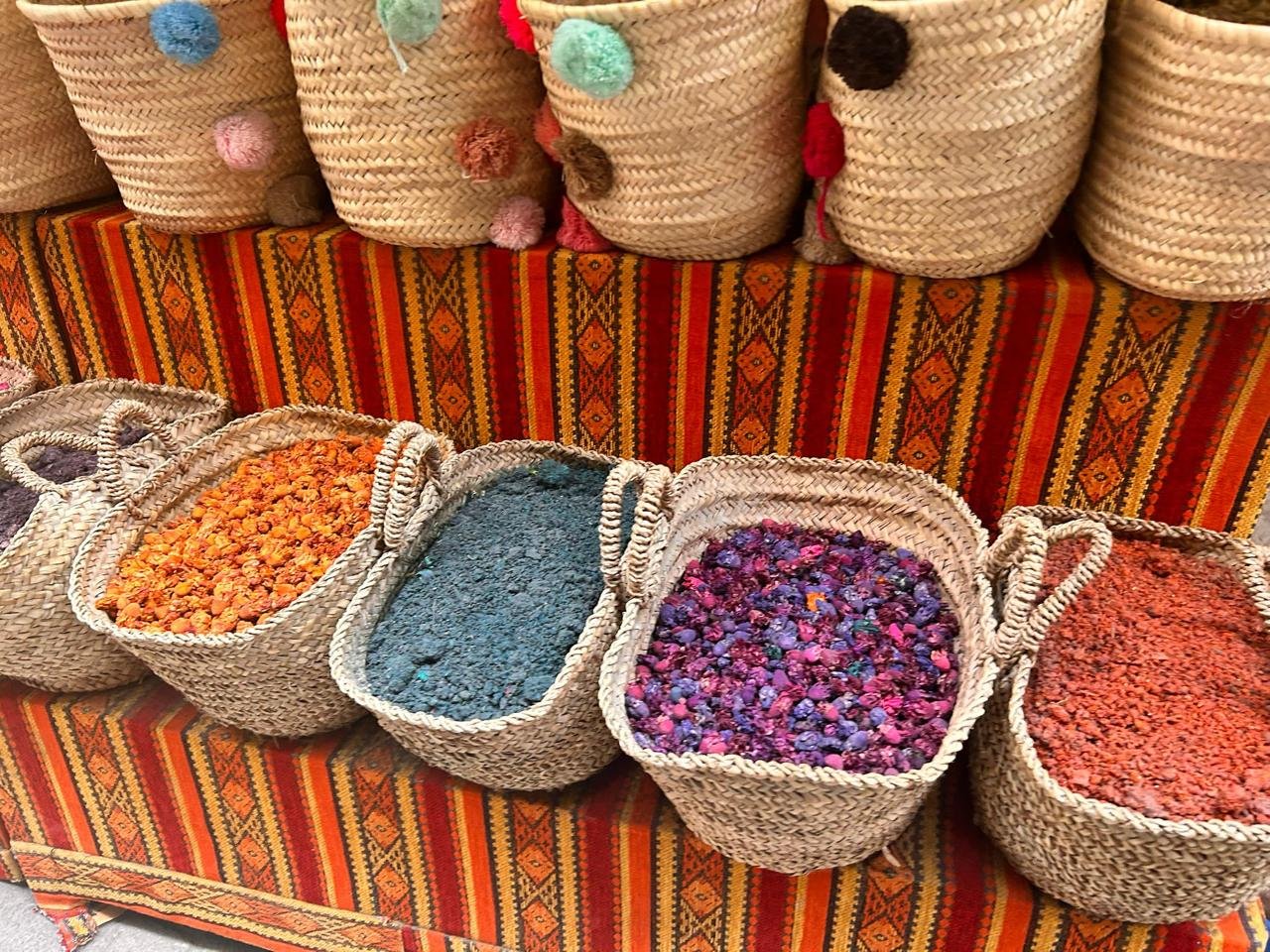
North of the square, the souks run for more than a kilometre of covered lanes. Look for Souk Semmarine (textiles and general goods), Souk des Teinturiers (dyers), Souk Haddadine (blacksmiths) and Rahba Kedima, the old spice square. Prices are rarely marked. Bargain politely, and walk away if the price does not suit you.
Good things to buy include leather bags and babouche slippers, hand-woven rugs, brass lanterns, ceramics, argan oil and spices. Fixed-price craft shops are useful for getting a sense of fair prices before you bargain.
Gardens and quiet places
Marrakech is a garden city, and the gardens are where you escape the noise.
- Majorelle Garden: created by the French painter Jacques Majorelle and later restored by Yves Saint Laurent and Pierre Bergé. Known for its cobalt-blue buildings and cactus collection. Book timed tickets online in advance.
- Le Jardin Secret: a restored riad garden in the heart of the medina, with a tower you can climb.
- Menara Gardens: a large reflecting pool and pavilion with olive groves, free to enter and best in late afternoon.
- Agdal Gardens: historic royal orchards south of the palace, open only on certain days.
Food, hammams and local experiences
Marrakech has its own dishes. Tanjia is the city's speciality: beef or lamb slow-cooked with preserved lemon, garlic and cumin in a clay urn, traditionally in the embers of a hammam furnace. Mechoui, whole roasted lamb, is sold by weight near the square at lunchtime. Also try chicken tagine with olives and preserved lemon, couscous on Fridays, harira soup, and mint tea with almond pastries. Our Morocco food guide covers these in detail.
A hammam is a steam bath followed by a scrub with black soap and a rough glove called a kessa. Public neighbourhood hammams are cheap and authentic, with separate hours or sections for men and women. Private spa hammams in riads and hotels are more comfortable for a first visit. A cooking class, usually starting with a market visit, is another good half-day activity.
Day trips from Marrakech
The city is a base for mountains, waterfalls, coast and desert landscapes, all reachable in a day.
| Destination | Distance | Drive each way | Why go |
|---|---|---|---|
| Ourika Valley | About 60 km | 1–1.5 hours | Berber villages, river and waterfalls |
| Imlil | About 65 km | 1.5 hours | Mountain village below Mount Toubkal (4,167 m) |
| Ouzoud Waterfalls | About 150 km | 2.5 hours | Morocco's best-known falls |
| Essaouira | About 190 km | 2.5–3 hours | Atlantic port, ramparts and seafood |
| Ait Ben Haddou | About 180 km | 3.5–4 hours | UNESCO-listed earthen ksar |
Popular choices are the private day trip to Essaouira and the Ouzoud Waterfalls day trip. The Sahara needs more time: see our Sahara desert tours from Marrakech, which run from two days upwards.
When to visit and how long to stay
Spring (March to May) and autumn (September to November) are the most comfortable, with daytime highs usually between 22 and 30°C. Summer is very hot, often 38°C or more in July and August, so plan sightseeing for early morning and rest in the afternoon. Winter days are sunny and around 18–20°C, but nights drop to about 5°C and riads can feel cold.
Two full days cover the essentials. Three or four days let you add a day trip and slow down. Marrakech Menara Airport is about 6 km from the medina, and trains link the city with Casablanca in roughly 2 hours 40 minutes.
Frequently asked questions
What is Marrakech best known for?
Its medina and Jemaa el-Fnaa square, the souks, historic palaces and gardens, riad accommodation, and its position as the starting point for trips to the Atlas Mountains and the Sahara.
How many days should I spend in Marrakech?
Two to three days is right for most visitors. Add a day for each day trip you want to take.
Can non-Muslims enter mosques in Marrakech?
No. Mosques in Marrakech, including the Koutoubia, are not open to non-Muslim visitors. The Ben Youssef Madrasa and the Saadian Tombs are open to everyone.
Is Marrakech walkable?
The medina is, and walking is the only way through most of it. Use taxis to reach Gueliz, the Majorelle Garden and the Menara Gardens.
To combine Marrakech with day trips or a desert tour, request a free custom quote from Discover Morocco Tour and expect a reply within 24 hours.