Morocco has no legal dress code for visitors, but modest clothing is respected: cover shoulders and knees in medinas and villages, wear loose layers, and keep swimwear for beaches and pools.
What to wear in Morocco? There is no legal dress code for tourists, but Morocco is a Muslim country where modest clothing is the norm and is quietly appreciated. In practice, both women and men are comfortable in loose clothes that cover the shoulders and knees in medinas, villages and religious sites, while swimwear stays at the beach or the pool. Light layers matter as much as modesty, because temperatures swing between day and night.
Is there a dress code in Morocco?
Officially, no. Visitors are not required to wear a headscarf or specific clothing, and you will see Moroccans dressed in everything from djellabas to jeans and fashionable streetwear. Unofficially, there is a strong social norm of modesty, especially in traditional neighbourhoods, rural areas and during Ramadan.
Dressing modestly is less about rules and more about comfort and respect. In our experience, travelers who cover shoulders and knees get fewer stares, fewer comments in the souks and warmer welcomes in village homes. It also protects you from a strong sun that can be intense even in spring.
For a full list of what to put in your suitcase, see our Morocco packing list; this guide focuses on how to dress, place by place.
What should women wear in Morocco?
Women have the widest choice, and a little planning goes a long way.
Recommended pieces
- Loose trousers or long skirts (midi or maxi), in linen or cotton.
- Tops with sleeves, at least covering the shoulders; T-shirts are fine, low necklines draw attention.
- A large scarf or pashmina: covers shoulders, protects from sun and dust, and works as a head covering in a mosque.
- A light long cardigan or kimono to throw over a sleeveless dress.
- Comfortable closed shoes or sturdy sandals for uneven medina lanes.
What to avoid in traditional areas
- Short shorts, mini-skirts and crop tops.
- Very tight or see-through clothing.
- Strappy tops without a cover-up.
Many women traveling with us also like to wear a light djellaba or a kaftan bought in the souk — it is comfortable, and locals often enjoy seeing visitors in Moroccan clothing. For broader safety and confidence tips, read our solo female travel tips for Morocco.
What should men wear in Morocco?
Men face fewer expectations, but the same principle applies. Long trousers or knee-length shorts are fine in cities; in mosques, villages and conservative towns, long trousers are better. Avoid tank tops and going shirtless anywhere except the beach or the pool. A light long-sleeved shirt is ideal for sun and evenings. Moroccan men rarely wear shorts outside sport and the beach, so trousers help you blend in.
Morocco dress code by place: a quick table
| Place | Women | Men | Strictness |
|---|---|---|---|
| Medinas and souks (Marrakech, Fes) | Shoulders and knees covered, loose fit | T-shirt, long trousers or long shorts | Medium |
| Modern districts (Gueliz, Casablanca) | Western clothes, knee-length dresses fine | Casual Western clothes | Low |
| Hassan II Mosque and religious sites | Arms and legs covered, scarf over hair | Long trousers, shoulders covered | High |
| Atlas villages | Long and loose, layers | Long trousers, shirt | High |
| Sahara desert camps | Loose long clothes, warm layer at night | Loose long clothes, warm layer at night | Low-medium |
| Beaches and hotel pools (Essaouira, Agadir) | Swimsuit or bikini on the beach or pool; cover up to walk in town | Swim shorts; shirt in town | Low |
| Riads and hotels | Relaxed; robe or cover-up in shared areas | Relaxed | Low |
What to wear to visit a mosque
Most mosques in Morocco are closed to non-Muslims. The big exception is the Hassan II Mosque in Casablanca, which offers guided tours for visitors. Some historic religious buildings, such as the medersas (Koranic schools) of Ben Youssef in Marrakech and Bou Inania in Fes, are also open as monuments.
- Women: long sleeves, long skirt or loose trousers, and a scarf over the hair inside the prayer hall.
- Men: long trousers and a shirt covering the shoulders.
- Everyone: shoes come off inside the prayer hall (at Hassan II you carry them in a bag). Socks are handy.
Tour times and rules can change, especially on Fridays and during religious holidays, so check before travel.
Cities vs desert vs mountains: dress for the setting
Marrakech and Fes
Marrakech's medina is used to visitors, but its narrow lanes are still traditional neighbourhoods. Fes is generally a little more conservative. Breathable long clothes and a scarf solve almost everything. In the evening, a light jacket is enough most of the year.
The Sahara
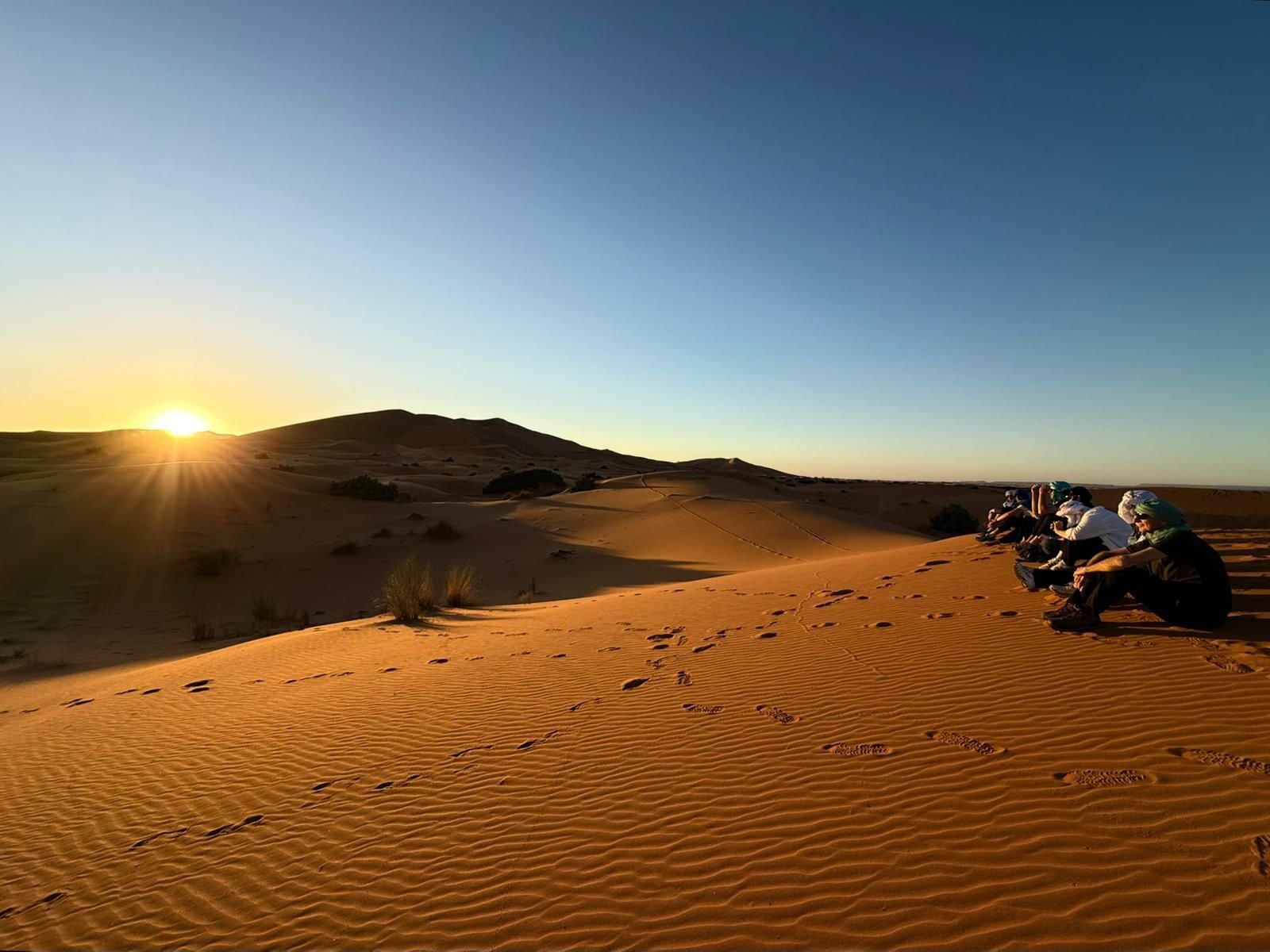
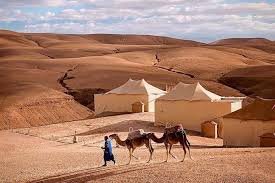
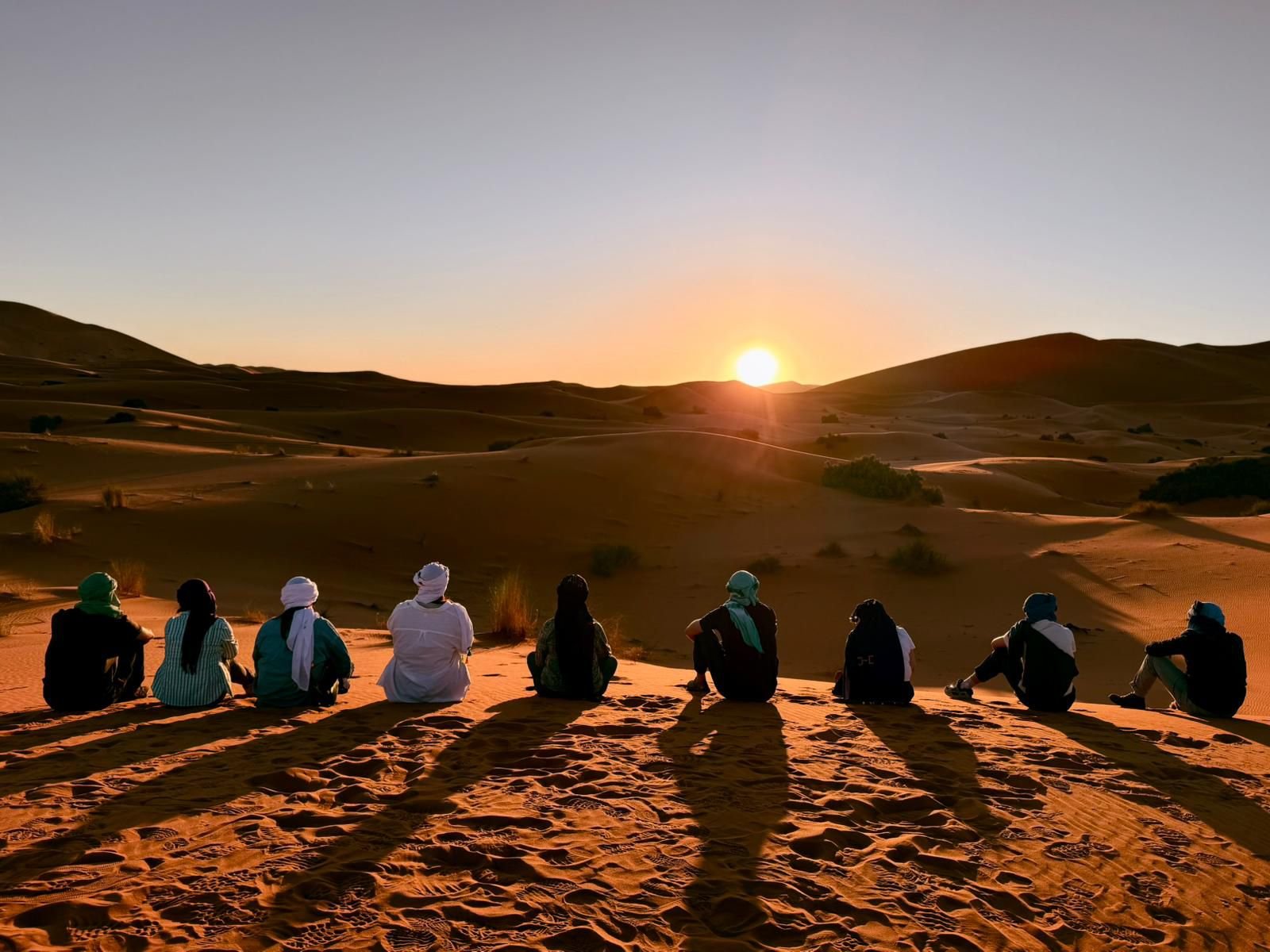
In the dunes of Merzouga or Zagora, think function: loose long sleeves and trousers to protect from sun and sand, a cheche (desert scarf), and a warm fleece or down jacket for the night. Our full guide on what to wear in the Sahara desert covers it season by season. On our Merzouga desert tours, the driver usually helps you tie your cheche before the camel ride.
The Atlas Mountains
Villages such as Imlil or those in the Ourika Valley are conservative and much cooler than Marrakech. Long trousers, a long-sleeved top, walking shoes and a windproof layer are ideal. Snow is possible above 2,000 m from December to March.
What to wear in Morocco by season
| Season | Marrakech day / night (approx.) | What to wear |
|---|---|---|
| Winter (Dec-Feb) | 18-20°C / 5-7°C | Long layers, sweater, warm jacket; down jacket for desert nights near 0°C |
| Spring (Mar-May) | 22-30°C / 10-15°C | Light long clothes, cardigan, scarf |
| Summer (Jun-Aug) | 35-40°C+ / 20-24°C | Very light loose linen, hat, sunglasses |
| Autumn (Sep-Nov) | 24-32°C / 12-18°C | Light long clothes, layer for evenings |
Special situations: Ramadan, beaches and evenings out
- Ramadan: dress a little more conservatively than usual, especially outside tourist areas.
- Beaches: bikinis are normal at hotel pools, beach clubs and tourist beaches like Agadir and Taghazout; on local beaches, many visitors prefer a one-piece or a cover-up. Topless sunbathing is not acceptable.
- Evenings out: trendy restaurants and rooftops in Gueliz or Casablanca welcome smart-casual Western outfits, dresses included.
Official travel advice, such as the UK government's Morocco travel advice, also recommends respecting local customs on dress.
Traveling with a private driver-guide makes all of this easier: they will tell you before each stop if a scarf or long trousers are a good idea. Discover our Morocco private tours, then ask us for a free tailor-made quote — we reply within 24 hours.
Frequently asked questions
Do women have to cover their hair in Morocco?
No. Women visitors do not need to cover their hair anywhere in daily life, including medinas and souks. Many Moroccan women do not wear a headscarf either. The only time you should cover your hair is inside a mosque open to visitors, such as the Hassan II Mosque in Casablanca. A scarf in your bag is still useful for sun, dust and village visits.
Can I wear shorts in Marrakech?
Men can wear knee-length shorts in Marrakech without problems, though long trousers blend in better in the medina. For women, short shorts attract attention in the souks; knee-length shorts or culottes are acceptable, but loose trousers or a midi skirt are more comfortable and respectful. In Gueliz, hotels and pools, shorts are perfectly normal for everyone.
Can I wear a bikini in Morocco?
Yes, at hotel and riad pools, beach clubs and tourist beaches such as Agadir, Taghazout or Essaouira. On quieter local beaches, a one-piece or a cover-up is more discreet. Do not walk through town or the medina in swimwear: put on a dress or shirt and shorts when leaving the beach. Topless sunbathing is not acceptable anywhere in Morocco.
What should I wear for a Sahara desert tour?
Wear loose, long, breathable clothes that protect you from sun and sand, closed shoes or sandals you can empty easily, sunglasses and a cheche scarf for your head. Bring a warm fleece or down jacket for the night, as desert temperatures can drop sharply after sunset, close to freezing in December and January. Dress codes are relaxed in camps.