Moroccan mint tea (atay) is Chinese gunpowder green tea brewed with fresh spearmint and sugar, poured from height to make foam. Offering it means welcome; accepting at least one glass is the polite answer.
Moroccan mint tea, called atay, is Chinese gunpowder green tea brewed with a generous bunch of fresh spearmint and sugar, then poured from high above the glass to create a light foam. It is far more than a drink: in Morocco, a tray of tea is how a family, a shopkeeper or a desert camp says welcome. If you are offered a glass, accept at least one — that simple gesture opens more doors than any phrasebook.
What is Moroccan mint tea, exactly?
Moroccan mint tea is a sweet, aromatic infusion built on three ingredients. The base is Chinese gunpowder green tea, rolled into small pellets that unfurl in boiling water. The second is fresh spearmint (nana), sold in fragrant bundles at every market. The third is sugar, traditionally broken from a solid sugar cone (qaleb sukkar) with a small brass hammer.
Tea itself is not native to Morocco. Green tea arrived through European trade routes, and it spread widely in the 19th century when British merchants shipped Chinese tea into Moroccan ports. Moroccans quickly made it their own by adding mint, and within a few generations atay became the national drink, served from Tangier to the edge of the Sahara.
The equipment on the tray
- The teapot (berrad): a bulbous metal pot, often silver-plated or engraved, that goes straight onto the flame.
- The tray (siniya): usually engraved brass or silver-coloured metal, sometimes on short legs.
- The glasses (kisan): small, often decorated with coloured or gilded patterns.
The Moroccan tea ceremony: how the ritual works
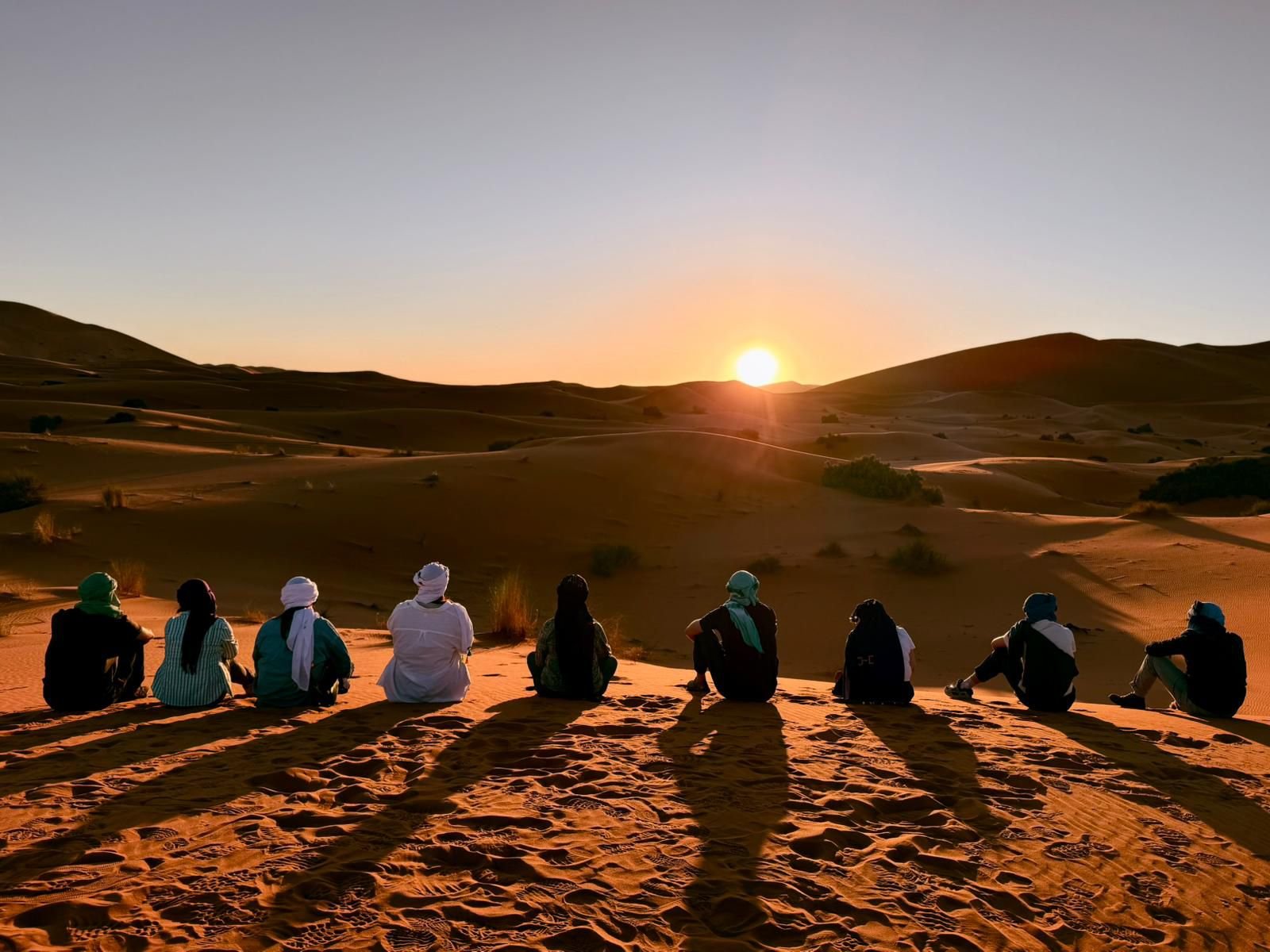
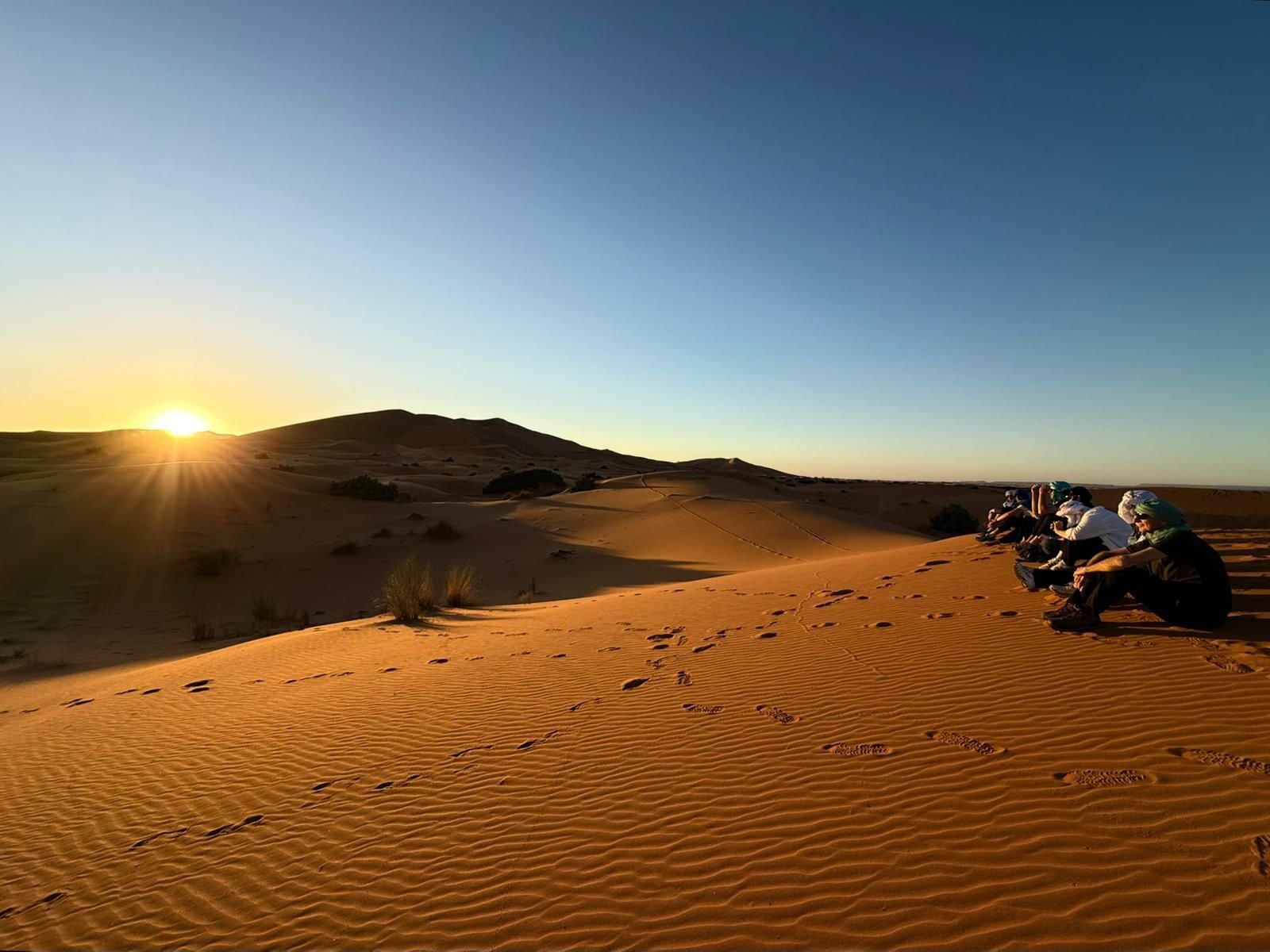
In a Moroccan home, tea is usually prepared in front of the guests, often by the head of the household or an elder. The preparation is slow on purpose: it is time for conversation. In our experience, the best moments of a private tour often happen around a tea tray — in a Berber house in the Atlas, in a carpet shop in Fes, or by the fire in a Merzouga camp after sunset.
Why the tea is poured from so high
The host lifts the teapot sometimes 30-50 cm above the glass and pours in a thin, steady stream. This does three things: it cools the tea slightly, it blends the sugar and mint evenly, and it produces a crown of foam (rghwa). A glass without foam is considered poorly served.
The three glasses
In the south and the desert especially, tea is often served in three rounds. A saying shared across the Sahara compares them to life: the first glass gentle as life, the second strong as love, the third bitter as death. Each round steeps longer, so the flavour really does change. You are never obliged to drink all three, but staying for at least one round is polite.
How to make Moroccan mint tea at home (authentic recipe)
This is the method our drivers and camp teams use, for a standard 600-750 ml Moroccan teapot (about 6 small glasses).
| Ingredient | Quantity | Tip |
|---|---|---|
| Gunpowder green tea | 1 heaped tablespoon (approx. 10 g) | "Chunmee" or "gunpowder" grades are the classics |
| Fresh spearmint | 1 large handful (approx. 20-30 g, stems included) | Use spearmint, not peppermint, which tastes too sharp |
| Sugar | 3-6 tablespoons, to taste | Moroccans like it sweet; start with 3 and adjust |
| Boiling water | approx. 700 ml | Bring to a rolling boil |
- Warm and "wake" the tea: put the tea pellets in the pot, add a small glass of boiling water, swirl, and pour this first glass into a cup. Keep it: Moroccans call it the "soul" (ruh) of the tea.
- Wash the tea: add another small glass of boiling water, swirl for a few seconds and throw this water away. It removes dust and some bitterness.
- Return the soul: pour the reserved first glass back into the pot.
- Add mint and sugar: push the mint into the pot, add the sugar, then fill with boiling water.
- Simmer briefly: place the pot on a low flame for 2-4 minutes, without letting it boil hard, or leave it to steep off the heat for 5 minutes.
- Mix by pouring: pour a glass and return it to the pot two or three times, then taste.
- Serve from height: fill each glass about two-thirds, lifting the pot as you pour to build foam.
Regional and seasonal variations of atay
Travel across Morocco and the herbs in your glass change. Asking about them is a great conversation starter with your driver-guide.
| Herb (local name) | When / where | Taste |
|---|---|---|
| Spearmint (nana) | All year, everywhere | Fresh, sweet, the classic |
| Wormwood (chiba) | Winter, especially in cities and the north | Bitter, warming; often mixed with mint |
| Sage (salmiya) | Atlas Mountains, Berber homes | Earthy and slightly resinous |
| Lemon verbena (louiza) | Summer, evenings; often caffeine-free | Lemony and calming |
| Thyme / wild herbs (zaatar) | Mountains and countryside | Herbal, peppery |
| Plain green tea | Sahara and the deep south | Strong and very sweet, many rounds |
In Saharan regions around Zagora and Merzouga, tea is often brewed stronger and served in repeated rounds over embers. In Fes and Tetouan, old families pride themselves on very fine glassware and elaborate trays. To pair your tea with the right food, see our Moroccan food guide: dishes to try.
Mint tea etiquette: what travelers should know
Tea etiquette in Morocco is relaxed, but a few habits will make you a better guest.
- Accept at least one glass. A flat refusal can feel like refusing friendship. If you truly do not want it, a smile and "shukran" with a hand on your heart is gracious.
- Hold the glass by the rim and base. Glasses have no handles and the tea is very hot.
- Less sugar is fine to ask for. Say "sukkar shwiya" (a little sugar) or "bla sukkar" (no sugar), ideally before it is prepared, because sugar usually goes into the pot.
- Do not rush. Tea is a pause. In shops, it rarely obliges you to buy anything — enjoy it and decide freely.
- Say "bssaha". It means roughly "to your health" and is the usual reply when someone serves you.
- During Ramadan, do not expect tea during daylight; it returns at sunset with the iftar meal.
Tea is also deeply linked to Amazigh hospitality in the mountains and desert — our guide to Berber (Amazigh) culture in Morocco explains the wider traditions behind it.
Where to drink the best mint tea in Morocco
In Marrakech
Ordinary neighbourhood cafés serve a glass or small pot for approx. 10-25 MAD; terraces overlooking Jemaa el-Fna or in the souks often charge approx. 25-45 MAD for the view. Many riads offer tea on arrival, free. Our Marrakech travel guide lists the best areas for a café break.
In a Berber village
On our private day trips from Marrakech to the Ourika Valley or Imlil, we often stop in a family home where tea is brewed on a small gas burner or wood fire and served with bread, olive oil and amlou. This is tea at its most authentic.
Bringing the ritual home: buying tea, pots and glasses
Spice shops and souks sell gunpowder tea by weight, usually approx. 40-100 MAD per 250 g depending on grade. A handmade engraved teapot ranges widely, approx. 150-900 MAD (15-90 EUR) depending on size, metal and finish; check whether it is food-safe and solid enough for a flame. Glass sets of six usually cost approx. 60-200 MAD. Wrap glasses in clothes in your checked luggage.
If you would like tea moments to be part of your trip — in a family home, a kasbah or a desert camp — our Morocco private tours can build them into each day at your pace. You can read more about atay on Wikipedia's Maghrebi mint tea page.
Planning your trip? Tell us your dates and interests and we will send a free, no-obligation private-tour proposal within 24 hours — just contact our Marrakech team.
Frequently asked questions
What kind of tea is used in Moroccan mint tea?
Moroccan mint tea uses Chinese gunpowder green tea, a tightly rolled green tea that unfurls in boiling water. It is combined with fresh spearmint and sugar. Some households add other herbs such as wormwood in winter, sage in the Atlas Mountains or lemon verbena in summer, but gunpowder green tea and spearmint remain the classic base across the country.
Is it rude to refuse mint tea in Morocco?
Refusing outright can seem cold, because offering tea is a sign of welcome. The polite approach is to accept at least one glass, even if you only take a few sips. If you cannot drink it, smile, place your hand on your heart and say shukran. Hosts understand, especially if you explain politely, and no one will force you.
Why do Moroccans pour tea from so high?
Pouring from height aerates the tea, cools it slightly, blends the sugar and mint evenly and creates a layer of foam on top, which Moroccans consider the mark of a well-served glass. Hosts often pour a glass and return it to the pot several times before serving. It is also part of the hospitality performance and a point of pride.
Does Moroccan mint tea contain caffeine?
Yes. Because the base is green tea, Moroccan mint tea contains caffeine, though usually less than a cup of coffee per small glass. Several rounds in an evening add up, so if you are sensitive, ask for lemon verbena (louiza) or a mint-only infusion, which many cafés and riads will happily prepare. It is also typically very sweet, so ask for less sugar.