Morocco is not too hot in summer if you choose well: Marrakech and the Sahara reach 37–43°C, but the Atlantic coast stays at 23–27°C and the Atlas villages are cool. Visit the desert at sunset and sunrise, and rest at midday.
Is Morocco in summer too hot? Inland, yes at midday: Marrakech averages about 37°C in July and August and the Sahara around Merzouga often passes 40°C. But Morocco in July and August is also breezy Atlantic beaches at 23–27°C, cool High Atlas villages and magical desert nights under the stars. With the right route and timing, summer is a very enjoyable season, and often a quieter, better-value one for desert tours.
Is Morocco too hot in July and August?
The honest answer depends on where you are and what time of day it is. Morocco has three summer climates: a hot, dry interior; a cool, windy Atlantic coast; and fresh mountain valleys. The table below shows approximate average temperatures our drivers live with every summer.
| Place | July (high / low) | August (high / low) | Summer feel |
|---|---|---|---|
| Marrakech | 37°C / 20°C | 37°C / 21°C | Hot and dry, pleasant after 7 pm |
| Fes | 35°C / 18°C | 35°C / 18°C | Hot afternoons, cooler nights |
| Merzouga (Sahara) | 43°C / 27°C | 41°C / 26°C | Very hot by day, warm nights |
| Ouarzazate | 37°C / 22°C | 36°C / 21°C | Dry heat, low humidity |
| Essaouira | 23°C / 17°C | 23°C / 17°C | Mild and windy, sea about 19–20°C |
| Agadir | 27°C / 18°C | 28°C / 19°C | Sunny beach weather |
| Imlil (1,740 m) | 28°C / 15°C | 28°C / 15°C | Fresh, perfect for walking |
| Tangier | 28°C / 19°C | 29°C / 20°C | Warm, some humidity |
Approximate averages. During a chergui (hot wind from the Sahara) inland temperatures can rise 5–8°C above these values for a few days.
The good news: the heat is dry. 37°C in Marrakech feels very different from humid heat, mornings are fresh until about 10 am, and evenings are lively and comfortable. In our experience, travellers who adapt their rhythm to the Moroccan one, active early and late, resting from 1 to 5 pm, rarely find summer a problem. For a year-round view, see our guide to the best time to visit Morocco.
Where to go in Morocco in summer: the cool coast
The Atlantic coast is Morocco's natural air conditioning. The cold Canary Current and the summer trade winds keep it 10–15°C cooler than Marrakech.
- Essaouira – 190 km (about 2h45) west of Marrakech. Constant wind, 22–24°C, ramparts, fish port and a relaxed medina. Kitesurfers love it; sunbathers should bring a windbreaker. Our Essaouira day trip guide explains how to make the most of it.
- Oualidia – A calm lagoon between El Jadida and Safi, famous for oysters, ideal for families.
- Agadir and Taghazout – Warmer sea, long beaches and surf schools.
- Asilah and Tangier – Whitewashed walls, art murals and pleasant evenings in the north.
- Mediterranean coast – Al Hoceima and the Rif coast have the warmest water (about 23–25°C) but are very busy in August.
The Atlas mountains in summer
Climbing just an hour and a half from Marrakech changes everything. At Imlil (1,740 m), afternoons are around 28°C and nights cool enough for a sweater. Summer is also the main season for climbing Toubkal (4,167 m), North Africa's highest peak, without snow equipment. Read our Atlas mountains trekking guide for routes and levels.
- Ourika valley – Riverside cafés where families cool their feet in the water; busy on Sundays.
- Imlil and the Toubkal National Park – Easy walks between Berber villages, walnut trees and apple orchards.
- Ait Bouguemez – The "Happy Valley", greener and quieter, about 4–5 hours from Marrakech.
- Ifrane and Azrou – Cedar forests at around 1,650 m on the way from Fes to the south.
Many of our day trips from Marrakech are perfect summer escapes: the Ourika valley, Imlil, the Ouzoud waterfalls or the Essaouira coast, all with an air-conditioned vehicle and an early start.
Merzouga desert in summer: is it possible?
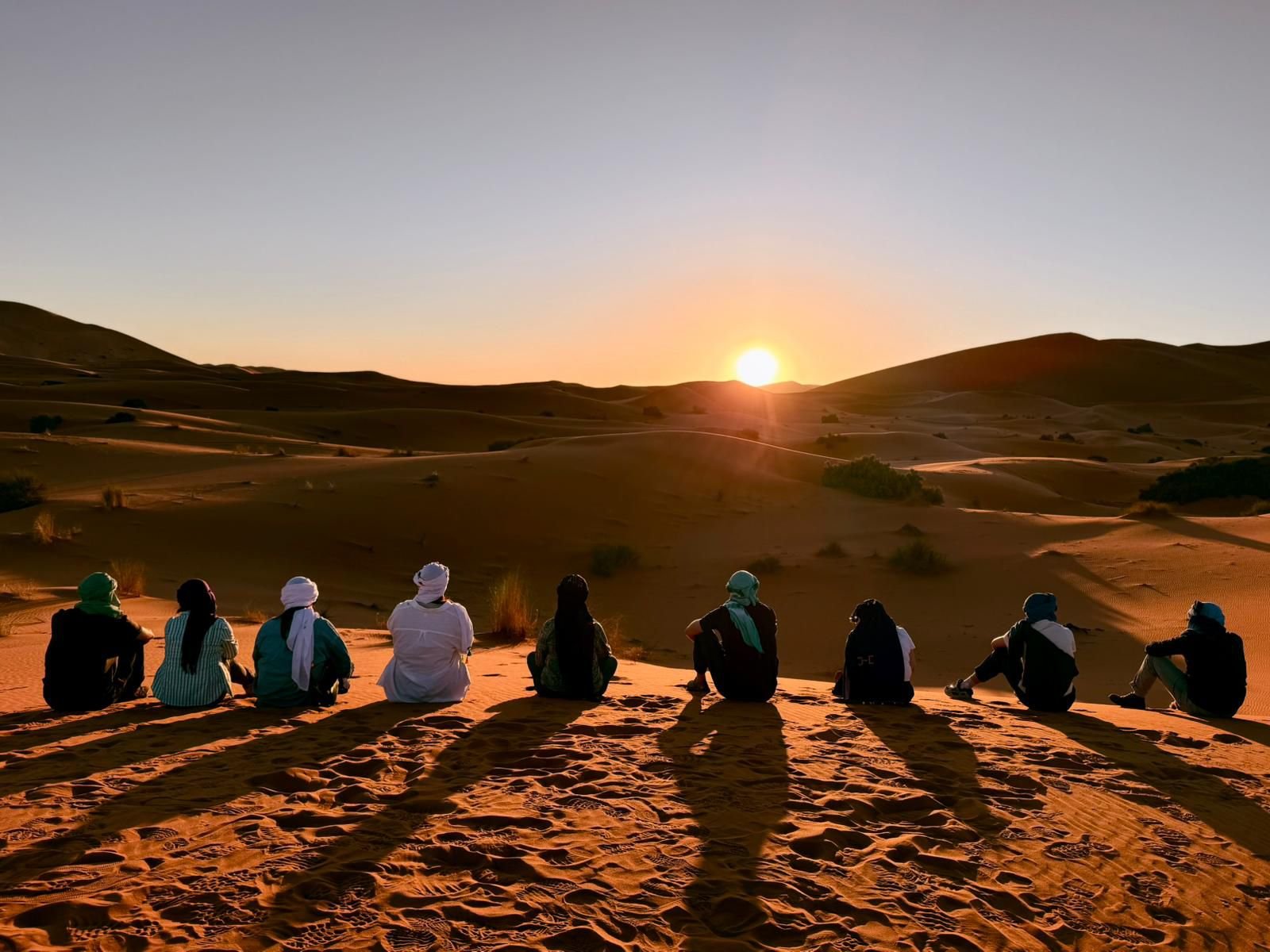
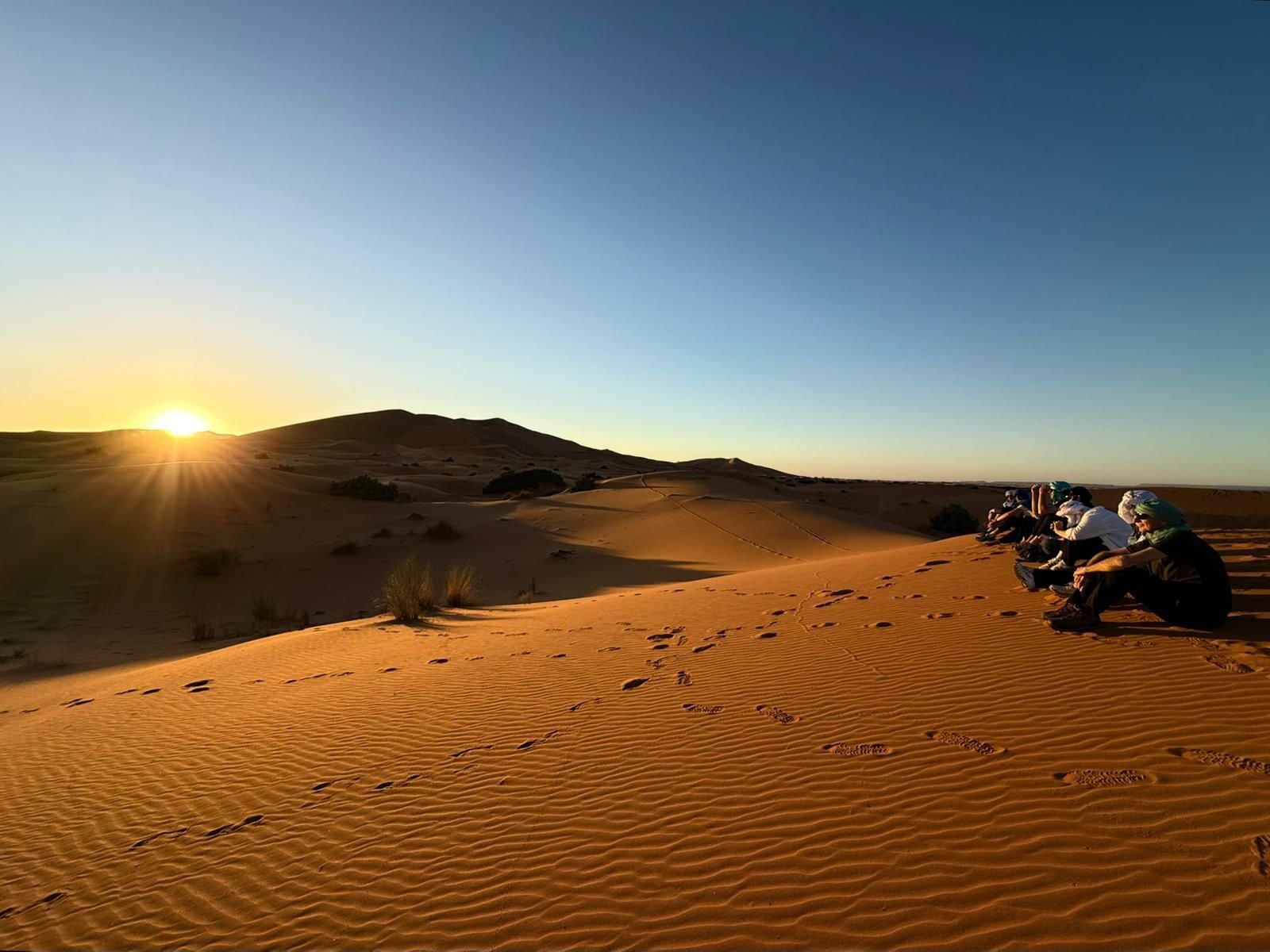
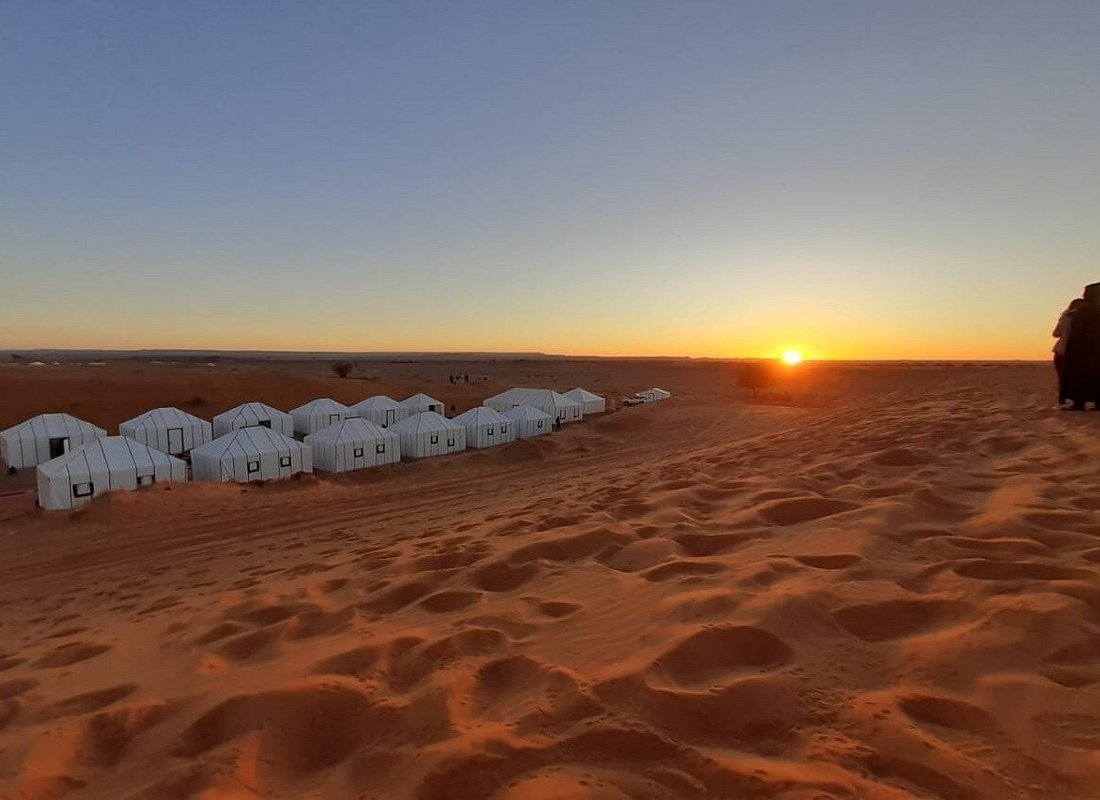
Yes, and many guests tell us the summer desert was the highlight of their trip. The trick is to treat the Sahara like the locals do: enjoy it at the edges of the day. Expect 40–45°C at midday in July, but sunset, night and sunrise are wonderful.
How we organise a summer desert tour
- Early departures – We leave around 7 am and drive the hottest hours in an air-conditioned 4x4 or minivan, with breaks in shaded cafés and kasbahs.
- Camel trek at sunset – Around 6:30–7 pm, when the sand has cooled and the light turns orange over Erg Chebbi.
- Night under the stars – Nights stay around 25–28°C. Many guests drag their mattress outside to sleep under the Milky Way, which is especially bright on moonless summer nights.
- Sunrise and early return – The sun rises around 6 am; we are back at the hotel for breakfast and a swim before 9 am.
Choose a camp with good ventilation or air-conditioned tents (several luxury camps offer this), and consider a hotel with a pool at the edge of the dunes for the hottest part of the afternoon. You will also see locals taking traditional hot sand baths in Merzouga in July and August, a summer cure believed to soothe joint pain. Our Merzouga desert tours are planned around these hours, and our Merzouga weather by month page gives the detailed figures.
Marrakech in summer: how to handle the heat
Marrakech in July is hot but very much alive. Here is the rhythm we suggest:
- 8–11 am: visit Majorelle Garden, Bahia Palace or the Ben Youssef Madrasa as soon as they open.
- 1–5 pm: lunch, then rest in your riad. A plunge pool or a rooftop shaded by a canopy makes a huge difference, so check this when booking.
- From 6 pm: the souks and Jemaa el-Fnaa come alive, terraces fill and the temperature becomes pleasant.
Taxis and private cars are air-conditioned; walking in the medina at 3 pm in August is what tires visitors most.
Summer crowds, events and prices
Summer in Morocco is low season for foreign tourism in the south, but high season for domestic and diaspora travel. From mid-July to the end of August, Moroccans living abroad return home in large numbers, especially via the ferry ports of Tangier, and beaches like Agadir, Martil or Saidia are packed.
- Gnaoua World Music Festival, Essaouira – usually late June.
- Throne Day (30 July) and Revolution of the King and the People (20 August) – national holidays; offices close, sights mostly open.
- Desert prices – camps and kasbah hotels in the south often have softer rates in July and August (approx.; check at booking).
- Coast prices – book beach hotels early for August.
Practical tips for travelling in Morocco in summer
- Drink at least 2–3 litres of water a day; your driver will keep bottles cool in the vehicle.
- Wear loose, light-coloured, long clothing in linen or cotton: it protects from the sun better than shorts and is respectful in villages.
- A wide-brimmed hat or a cheche, sunglasses and SPF 50 are essential.
- Choose accommodation with air conditioning and, in the south, a pool.
- Plan fewer kilometres per day than in spring and avoid long drives across the hottest afternoon.
- Check the latest health and heat advice from official sources such as the Visit Morocco tourism board before travel.
Travelling to Morocco in July or August? We will design a heat-smart private itinerary that balances the desert, the mountains and the coast, with early starts and the right hotels. Ask Chahid Voyages Maroc for a free quote and receive a proposal within 24 hours.
Frequently asked questions
Is Morocco too hot to visit in July and August?
Not if you plan well. Marrakech and Fes average 35–37°C and the Sahara often exceeds 40°C, but the heat is dry and mornings and evenings are pleasant. The Atlantic coast stays around 23–27°C and Atlas villages are much cooler. Visit sights early, rest from 1 to 5 pm, and choose air-conditioned transport and hotels with a pool.
Can you visit the Sahara desert in summer?
Yes. Summer desert tours to Merzouga work well if you drive during the day in an air-conditioned vehicle, ride camels at sunset around 6:30–7 pm and return after sunrise. Nights are warm, around 25–28°C, and the starry sky is spectacular. Choose a well-ventilated or air-conditioned camp and drink plenty of water throughout the trip.
Where is the coolest place in Morocco in summer?
Essaouira is the coolest city, staying around 22–24°C thanks to constant trade winds. The High Atlas is also refreshing: Imlil, at 1,740 m, rarely exceeds 28–30°C, and nights are cool. Ifrane and the cedar forests of the Middle Atlas, and the northern coast around Asilah and Tangier, are other good choices to escape the heat of the interior.
Is summer cheaper for a Morocco tour?
Partly. In the south, including the desert, July and August are low season for international visitors, so camps and kasbah hotels often offer softer rates and more availability (approx.; check at booking). Coastal resorts, by contrast, are at their busiest and most expensive in August because of Moroccan family holidays. Flights can also be more expensive during European school holidays.