
The easiest way to get online in Morocco is a local prepaid SIM from Maroc Telecom, Orange or Inwi (approx. 5-10 EUR for 10-20 GB) or a travel eSIM set up before you fly. Maroc Telecom has the best coverage in the desert and mountains.
A Morocco SIM card is the cheapest and most reliable way to stay connected on your trip: a local prepaid SIM from Maroc Telecom, Orange or Inwi costs only a few euros and gives you 10-20 GB of 4G data. If you prefer to land already online, a travel eSIM is a convenient alternative, although usually more expensive per gigabyte. Below we explain which option suits which traveler, how to buy and top up, and what coverage really looks like on the road to the Sahara.
Which Morocco SIM card operator is best?
Morocco has three mobile networks, all regulated by the national telecom agency (ANRT). All three offer 4G in cities, and 5G is being rolled out in the main urban centers, so check availability before you travel if 5G matters to you.
Maroc Telecom (IAM)
The historic operator and, in our experience, the safest choice if your itinerary includes the Sahara, the High Atlas or the Draa Valley. Our drivers almost all use Maroc Telecom for exactly this reason: on the N9 over the Tizi n Tichka pass, along the Dades and Todra gorges and around Erg Chebbi, it usually holds a signal where others fade.
Orange Maroc
Strong in cities and along the main highways, with frequent promotions that double or triple the data on a recharge. A good choice if you stay mostly in Marrakech, Casablanca, Rabat, Fes and Essaouira.
Inwi
The youngest operator, popular with Moroccans for generous data bonuses and social-media passes. Coverage is good in towns but thinner in remote mountain and desert areas.
| Operator | City 4G | Desert & mountains | Typical tourist offer (approx.) | Best for |
|---|---|---|---|---|
| Maroc Telecom | Excellent | Best of the three | 10-20 GB for 50-100 MAD | Sahara and Atlas tours |
| Orange | Excellent | Good on main roads | 10-20 GB for 50-100 MAD, frequent bonuses | City breaks, coast |
| Inwi | Very good | Patchy off main roads | Large data bonuses on recharges | Budget, urban stays |
Prices and bundles change often, so treat these figures as approximate and check the current offer in the shop.
Local SIM vs eSIM: which should you choose?
Both work well. The choice comes down to price, convenience and whether your phone supports eSIM.
- Local physical SIM: cheapest data, a Moroccan number for calls to riads, restaurants and your driver, and the best coverage options. You need an unlocked phone and a few minutes in a shop.
- Local eSIM: the Moroccan operators have started offering eSIM in some of their own shops. Availability for tourists varies, so ask in an official store.
- International travel eSIM: bought online from an eSIM app before departure, activated as you land. Very convenient, no passport registration in Morocco, but usually 2-4 times the price per GB and often data only, with no local number.
- Home roaming: simplest but often the most expensive option. Check your carrier's Morocco rates before you fly; Morocco is outside EU roaming rules.
Our advice: if you are on a private tour of a week or more, a local Maroc Telecom SIM gives the best value and coverage. For a short city break, a travel eSIM is perfectly fine.
How to buy a SIM card in Morocco
At the airport
At Marrakech Menara (RAK), Casablanca Mohammed V (CMN), Fes and Tangier airports, operator booths or promoters in the arrivals hall often hand out SIM cards, sometimes free, and sell a first data recharge on the spot. Opening hours can be limited for late-night flights, so do not count on them after midnight.
In town
Official operator shops in Gueliz (Marrakech), the Ville Nouvelle of Fes or any city center give the most reliable service: staff will register the SIM, activate the data pass and check it works before you leave. Small corner shops (téléboutiques) and newsagents sell SIMs and scratch recharge cards too.
What you need
- Your passport: SIM cards must be registered to an ID by law.
- An unlocked phone (check with your carrier before you travel).
- Cash in dirhams for the recharge; card payment is accepted in most official shops.
- A SIM ejector tool or paper clip, and a safe place to keep your home SIM.
How to top up and activate data
Moroccan prepaid works with recharges (recharge) sold as scratch cards, electronic top-ups in shops or through the operator's app. After paying, you activate a data pass, usually by dialing a short code printed on the card or chosen in the app. The shop assistant can do this for you; ask them to activate the "Internet" pass rather than leaving the credit as call balance.
- Recharges come in small amounts (10, 20, 50, 100 MAD and up).
- Data passes typically last 7 or 30 days; check the validity.
- Download the operator's app to monitor your remaining data.
- Keep 20-30 MAD of credit for calls; a short local call to your riad is very cheap.
Internet coverage on the road and in the Sahara
After many seasons on the road, this is what our guests can realistically expect on classic itineraries:
- Marrakech, Fes, Casablanca, Rabat, Tangier, Essaouira: fast 4G everywhere, plus Wi-Fi in nearly every riad and cafe.
- Tizi n Tichka (2,260 m): generally good on the pass itself, with short dead zones in some bends and around Telouet.
- Ouarzazate, Skoura, Dades and Todra: good in towns, patchy deep in the gorges.
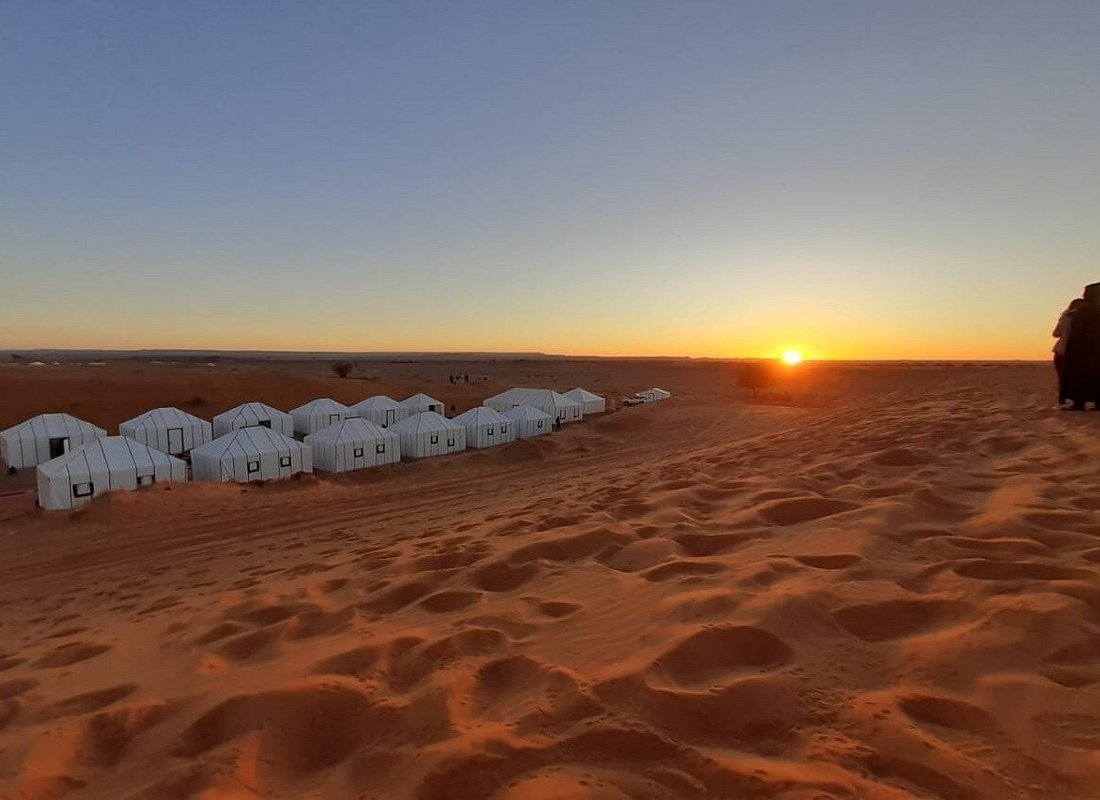
- Merzouga and Erg Chebbi: 4G in Merzouga village and Hassilabied; most camps on the edge of the dunes have signal, more remote camps may have only a weak one. Camp Wi-Fi, where offered, is slow.
- Zagora and M'Hamid: good in Zagora; weak to none in the open desert beyond M'Hamid.
Our tip: download offline Google Maps, your boarding passes and any music or films before leaving for the desert. And honestly, a night without notifications under the Sahara stars is part of the magic, as we explain in our Sahara desert tour guide.
Practical tips to stay connected in Morocco
- WhatsApp is king: riads, guides and drivers communicate mostly on WhatsApp, including with us. A local number makes this easy.
- Power: Morocco uses 220 V with type C and E plugs; bring an adapter and a power bank for long desert drives.
- Public Wi-Fi: fine for maps and messages; use a VPN for banking.
- Calls home: use internet calls on WhatsApp or similar apps rather than international minutes.
- Driver's phone: on our private tours, your driver always carries a phone with a local SIM, so you are never out of reach in an emergency. See our Morocco private driver service.
For other pre-trip essentials, see our guides to money and currency in Morocco and Marrakech airport arrivals.
Plan a connected, stress-free trip
Good data makes independent moments easier, but on a private tour the logistics are handled for you: transfers, routes, camps and timings. If you are designing a trip that combines cities, the Atlas and the desert, explore our Morocco private tours and tell us your dates. We are happy to send you a free, tailor-made quote within 24 hours, and we will gladly answer any practical question about SIM cards along the way.
Frequently asked questions
Can I buy a Morocco SIM card at Marrakech airport?
Yes. Operator booths or promoters in the arrivals hall at Marrakech Menara usually offer SIM cards, sometimes free, with a data recharge sold on the spot. They may be closed for very late arrivals. If so, any official Maroc Telecom, Orange or Inwi shop in Gueliz or the medina area can set you up the next morning in about ten minutes with your passport.
Which network works best in the Sahara desert?
In our experience Maroc Telecom offers the most consistent coverage around Merzouga, Erg Chebbi, Zagora and the Atlas mountain roads, which is why most local drivers use it. Orange works well on main roads, while Inwi is weaker in remote areas. Deep in the dunes or beyond M'Hamid, expect weak or no signal on any network.
Is an eSIM a good idea for Morocco?
An international travel eSIM is a good idea if your phone supports it and you want data immediately on landing, especially for short trips. It avoids a shop visit and passport registration. However, it usually costs several times more per gigabyte than a local SIM and often has no Moroccan phone number, which is handy for calling riads or restaurants.
How much does mobile data cost in Morocco?
Mobile data is inexpensive. As a rough guide, 10 to 20 GB on a local prepaid SIM costs approx. 50-100 MAD (5-10 EUR), and operators often add bonus data on larger recharges. Travel eSIMs bought online typically cost more. Offers change frequently, so check the current bundles in an official shop or on the operator's website before buying.